


Conductors are substances that contain a large number of charges that are free to move about through the material.Dielectrics possess no free charges that can drift around under the control of an externally applied electric field.Dielectrics possess no free charges that can drift around under the control of an externally applied electric field.Electronic Polarization occurs when an electric field distorts the negative cloud of electrons around a positive atomic nucleus in a direction opposite the field.In polar molecules, each permanent dipole will experience a force by the external polarizing field, tending to line it up along the field direction.
Features
Electronic Polarization Of Atoms In Static Electric Field
In previous discussions, we have considered the effect of an electric field on charges in free space. In this section, we shall study the effect of electric fields on material media. Matter, which is made of atoms or molecules, comes in many varieties—solids, liquids, gases, metals, woods, and glass—and these substances do not all respond in the same way to electrostatic fields.
In free space, the electric field is defined as force per unit charge. This implies that the electric field in free space is a measurable quantity. However, measuring the electric field inside materials may be very difficult or impractical. Instead, we can focus on the external effects of a material body using external measurements.
In general, we classify materials according to their electrical properties into three types: conductors, semiconductors, and insulators (or dielectrics).
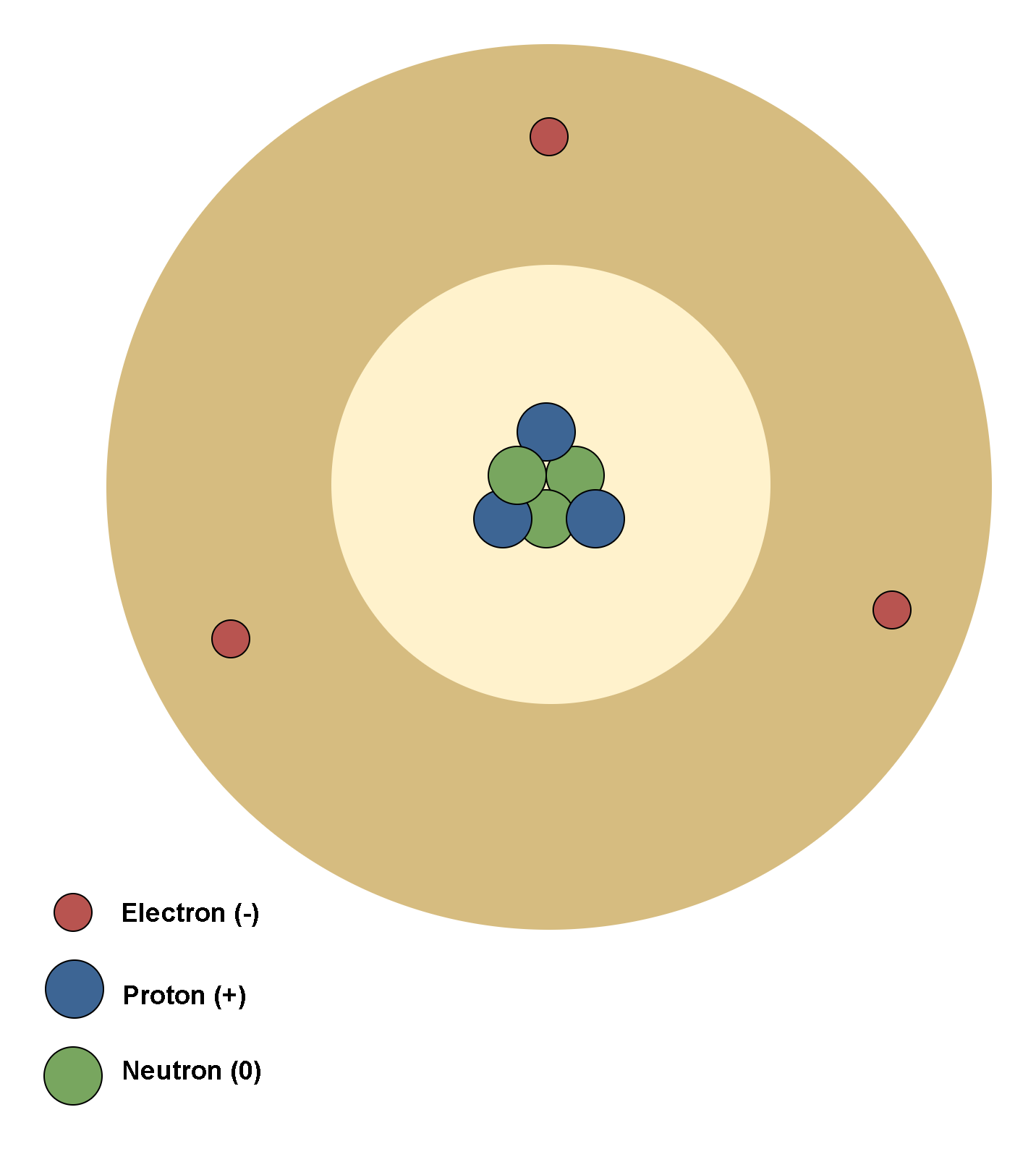
In terms of the orbital atomic model, each atom consists of a positively charged nucleus with orbiting negatively charged electrons in a cloud surrounding the nucleus.
In conductors, which are substances that contain a large number of mobile charges, the electrons in the outermost shells of each atom, are very loosely held and migrate easily from one atom to another. Most metals belong to this group. In a typical metal body, this means many of the electrons (one or two per atom) are not associated with any particular nucleus, but roam around at will.
In dielectrics, by contrast, every electron is attached to a specific atom or molecule, and all charges can move a bit within the atom or molecule. Such microscopic displacements are not as large as the rearrangement of charge in a conductor, but their cumulative effects account for the characteristic behavior of dielectric materials.
The electrical properties of semiconductors fall between those of conductors and insulators and they can pass a relatively small number of freely movable charges.
An atom as a whole is electrically neutral. When a neutral atom is placed in an electric field E, these two regions of charge within the atom are influenced by the field: the nucleus is pushed in the direction of the field, and the cloud of electrons the opposite way. Thus, the center of charge of the electron cloud in an atom moves slightly concerning the center of charge of the nucleus. This temporary separation of charge from their equilibrium position makes one side of the atom somewhat positive and the opposite side somewhat negative. This phenomenon creates a dipole moment in the atom and is called electronic polarization.